Feels Like a Coming of Age
- Jan 28, 2018
- 6 min read
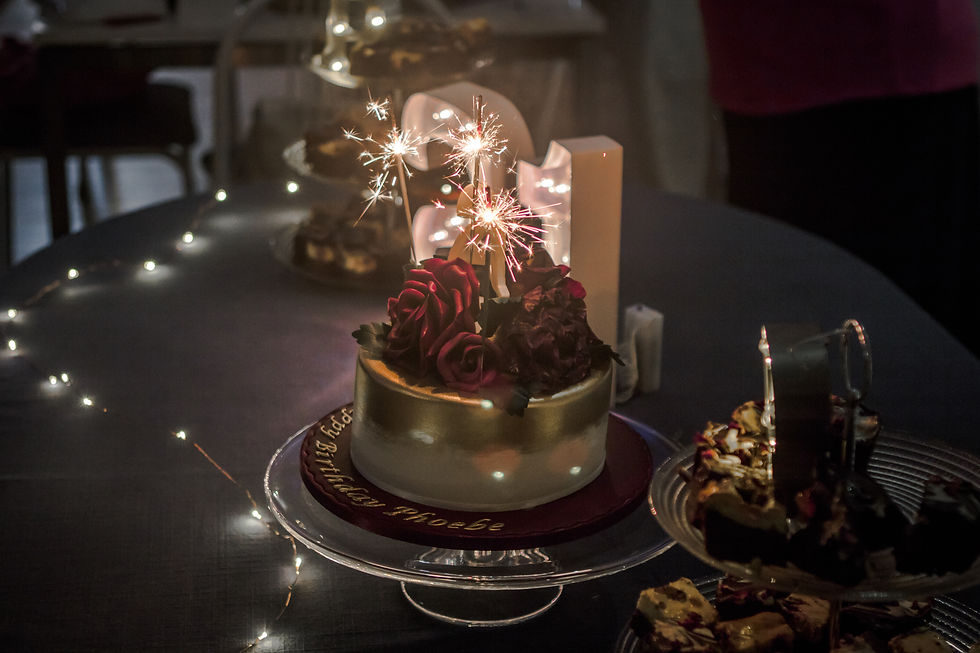
Even though turning twenty-one does not remove any bar to some long withheld right or privilege in Australia, it still represents a coming of age. I've already had many milestones that represent my transition into adulthood - graduation, learning to drive, being able to drink, being about to vote - but twenty-one seems like the last one for a while.
The strange thing about being 21 is you imagine all the moments in time you were younger and someone older than you was 21. I've gone through my memories from those as a child to more recent years: all the times I went to a relatives party as a child, all the times I spoke with a friend that was 21. Trying to understand that what I feel now is perhaps what they felt then.
And what do I feel now? Pretty much the same as before - I don't feel adulthood thrust upon me or like this is the first year of the rest of my life. I do feel more sure of myself than I did when I was 18. I don't have the same intense desire to make myself be something every moment of every day. I don't know what I want to do with the rest of my life but I know the things I don't like and have the temperament to navigate through rest without getting anxious.
The last few years have had some high highs and low lows. I've been incredibly fortunate to have had the opportunities I have had but I am also aware of the physical and psychological toll they have taken on me. While my first two years of university had been enlightening and incredibly productive, I had left 2015 feeling burnt out and bruised. I was tired all the time and had withdrawn myself largely from the world to rebuild myself.
I had thought the best way to do this was cutting all extra-curricular activities and focus solely on my studies, health and work. My loved ones have always told me I went at 100 miles an hour and here I was finally listening to them and slowing down. But removing all my passions did not lead to rejuvenation. I had more time, yes, but it did not feel like it. I may have removed time consuming activities but it effectively destroyed my motivation as well.
So in 2016 I tried to remedy this. I thought it was going to be my year but I didn't start it out on the right foot either. In an aim to rid myself of all distractions, I cut myself off from social media. I left all but one Facebook group, deleted my SnapChat and suspended my Instagram account. The effect was that I found other distractions but now I was socially isolated and my motivation still was not restored. I had been using time pressure to achieve and so lacking strong self-discipline as a foundation, I was not productive and squandered my time.
Would 2017 be better? Well I contracted a major illness that took me a year to recover from so maybe not. I think the experience is best put in the words of Maria Popova:
"In my own experience, the most withering aspect of [physical illness] is the way it erases ... the memory of wellness. The totality of the erasure sweeps away the elemental belief that another state of being is at all possible — the sensorial memory of what it was like to feel any other way vanishes, until your entire being contracts into the state of what is, unfathoming of what has been, can be, and will be."
I spent the first half of the year studying part-time and just ... sleeping. The second part of the year was better but my energy levels could still barely sustain part-time work and part-time study. In a way I'm very glad I got sick at the start of the year since it allowed me to readjust my perspective.

For the longest time I have been yearning to return to the breakneck pace I threw myself into life at during my early university years but I know I cannot. My body simply cannot sustain it. Besides my life as an independent adult cannot sustain it. I cannot spend all my time studying and volunteering as well as working, doing the laundry, cleaning the house and keeping my life in order. And I refuse to think that means I've already peaked. It just means I have to prioritise and pick the commitments that make me the happiest and give me the greatest returns.
Besides I think it's a bit of a danger for everyone to constantly keep moving forward at the sake of forgetting the past. Yes, people should strive to be better but if you stop and look around, life's pretty great already as it is and so are you. I think it's too easy to fall into the trap where happiness is the moment until you realise you want more happiness.

You don't have be happy all the time. You don't need to be succeeding all the time. I think people need to give themselves the chance to experience different things and realise that it might not be what they want. Otherwise you get to scared that you might fail to try something new or worse, you try it and pretend it was great and end up following a path in life that leaves you deeply unsatisfied.
It's hard when people say follow your passion or do what you love because I'm still figuring out what I love doing. That involves trial and error. It's not glamorous or instaworthy but it's necessary if you want to find what makes you truly fulfilled.
TL;DR - These are the main things I've learnt in my 21 years on Earth:
1. I'll never have as much time as I do right now.
I'm an unemployed university student on exchange. If I'm not using my spare time to learn topics, languages and skills I've always wanted to learn, I'm doing myself a disservice. Time is the most valuable resource I have and it will only get more so as I get older.
2. If I have my health, I have everything.
You are your habits. The things you do everyday and the way you behave everyday is who you are. When you are too tired to read, to see your friends, to study, to work, your capacity to live fully is profoundly impacted. Eating in moderation, moving everyday and sleeping enough is the least I do to achieve the life I want to live.
3. Budget time like I budget money.
Even though I have more spare time than I will ever have, I will still have far more interests than I pursue. There are always going to be new and exciting TV shows, books, movies, sports, hobbies to watch and learn. I cannot convince myself that I will follow a routine but only after I finish binge-watching some TV show or as soon as I finish an assignment.
Part of this involves consciously acknowledging the time it takes doing tasks. I have 6 readings to do this week for one course? Allocate 30 minutes to each reading. Don't let yourself just keep reading and get surprised when you have not finished all the work you thought you complete that day.
At the same time, like a money budget, you can afford to splurge. You need exceptions so you can enjoy spontaneous outings with friends and the little pleasures in life. It's just when your life becomes a series of exceptions, not a routine, then it's too easy to be unproductive.
4. Motivation is fleeting, self-discipline is the foundation of sustainable achievement.
Time pressure is a great motivator but I don't fancy the chronic stress that accompanies it. Enthusiasm as a motivator too has its drawbacks because it prompts long, once off stretches of productive work and only for tasks that you enjoy doing. Life is going to be full of menial as well as enjoyable tasks so it just doesn't work. So far I've found the best way to maintain self-control is by having SMART goals, a realistic routine, not multi-tasking and forgiving myself then moving on when I indulge my lazy side.
5. Prioritise and say "no".
Don't sign up to every club and society. Yes the board games club sounds like fun but you know what's more fun? Playing board games with my friends, not strangers.
6. Stop and truly rest.
Resist the path of least resistance when it comes to leisure. Watching TV makes time go quicker and leaves you just as tired. Books are good when you need to escape reality and listening to music/podcasts is better when you are too tired to read. The best leisure activity I've found so far is hiking - the harder the better. I just love the sense of accomplishment - it's so immediate compared to all the delayed gratification that comes with studying/working.
7. Stop planning; do.
I've always been a person who plans their life; tries to maximise their experiences to get the most out of it. But it becomes too intoxicating to spend life making an ideal routine and endless to do lists. It's too addictive to dream about what your life could be instead of just living it as it is right now.


Comments